Translating Light: Four Workshops in Photographic Printing
Applications are now open, on a rolling basis, for workshops between
August 2027 and August 2028.
Ready to begin? Apply here. Questions? We would love to hear from you through our contact form or email us directly.
Imagine
Carlo Rovelli, in his astonishing discourse on physics and philosophy, writes “asking “did this happen” only makes sense if we focus on “with respect to whom it happened”.” We tend to ask that of the photographic moment, but not so much of the experience of the print.
Imagine — a print made entirely by hand, that not only “happens” and varies in its effect upon the viewer, but, mindbogglingly, imagine what shifts if we consider that the maker and the viewer are conditioned by the process and the print.
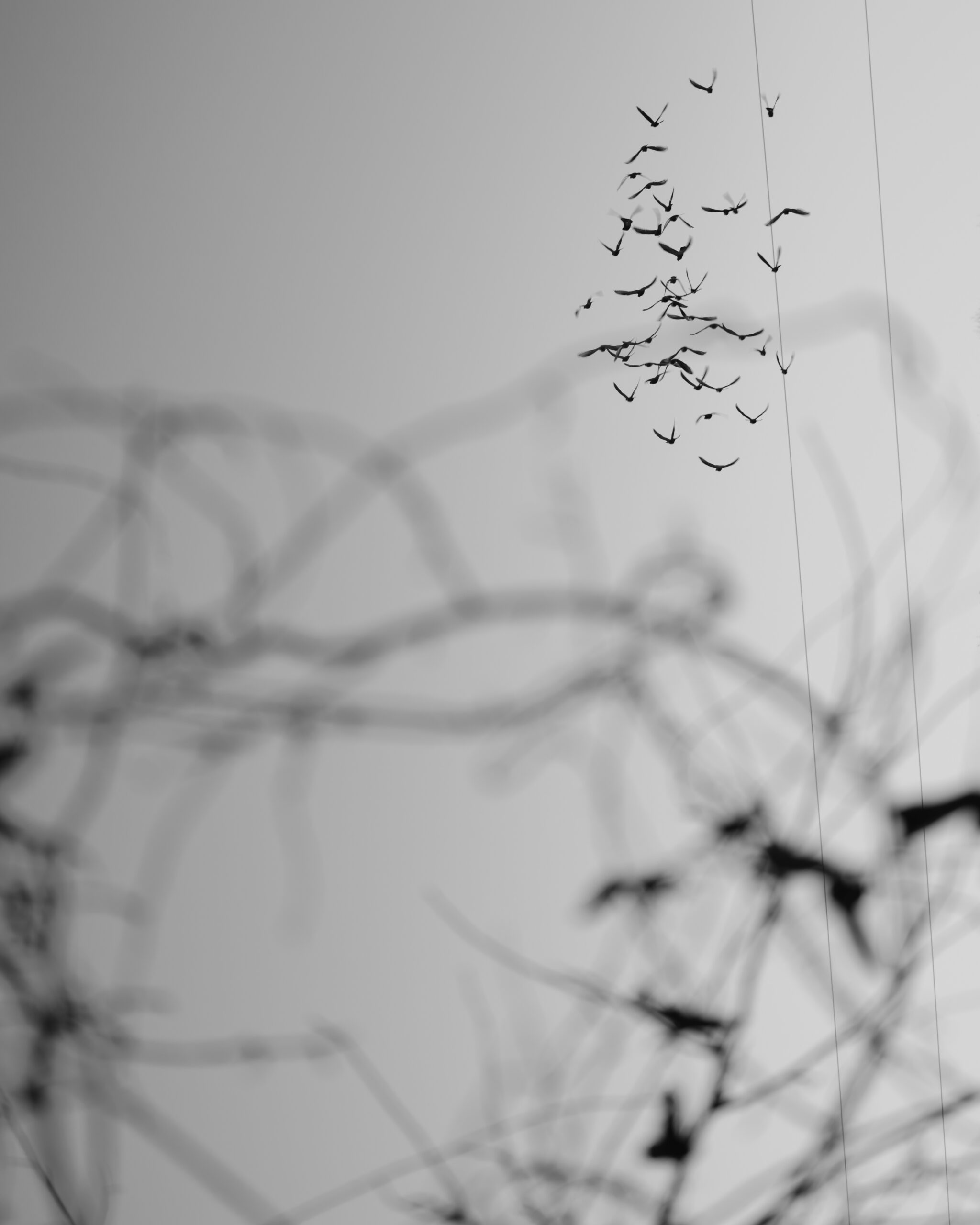
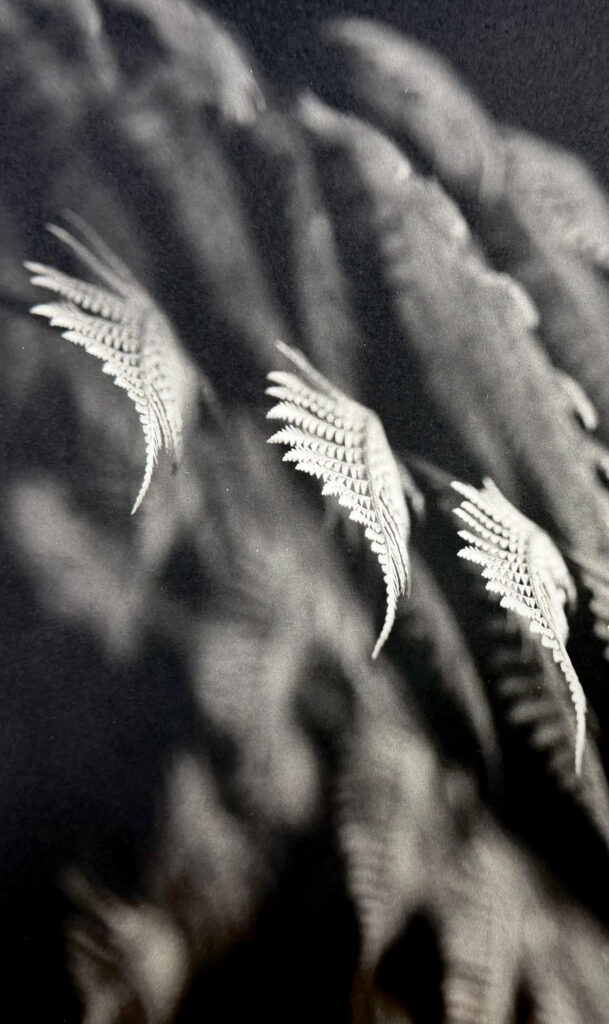
(detail) Fern, Argyll. 2026. Platinum-palladium print on Revere
Rachel Malde
About the Series · About the Instructor · The Workshops · Is This For You · How It Works · Calendar · Cost · Apply
What Makes This Workshop Program Distinctive
Translating Light is a series of four photographic workshops rooted in the platinum/palladium process, led by Pradip Malde, at the Kozo Press studio in Sewanee, Tennessee. The series begins with an introduction to hand-coated platinum/palladium printing and builds to an advanced study of how materials shape the way a fine print is read.
Each workshop stands on its own. Take one, several, or all four, starting at the level that fits your experience.
Very small groups, by design. Every workshop has exactly two participants. This allows detailed, attentive teaching: working carefully with your images, your questions, and at your pace, results in ingrained cognitive and practical skills, as well as the ability to apply these to changing circumstances.
Teaching, not production. These are not printing sessions with an instructor acting as technician. Our aim is to teach and guide you so that you can continue your practice independently when you return home.
About the Instructors
Pradip Malde is a photographer and Guggenheim Fellow. He taught photography at the University of the South in Sewanee for more than 35 years, where he is Emeritus Professor of Art. He is co-author, with Dr. Mike Ware, of Platinotype (Routledge, 2021), and these workshops are grounded in the Malde-Ware system. He is also the author of the monograph From Where Loss Comes (Charcoal Press, 2022). The workshops will also be guided and assisted by Rachel Malde, co-founder of Kozo Press, and an artist and educator with over 25 years of teaching experience. She is currently a faculty member at St. Andrew’s-Sewanee School in Tennessee. Both of us are deeply committed teachers and photographers, and have shaped Kozo Press’s programming on the belief that carefully crafted work embodies meaning and memory, and helps us better understand the world.
The Four Workshops
| # | Workshop | Level | Duration | Tuition | Materials |
|---|---|---|---|---|---|
| 1 | Digital Internegatives & Foundations of Platinum/Palladium Printing | Foundational — beginners welcome | 3 days | $1,800 | $300 |
| 2 | Wet-Lab Internegatives for Platinum/Palladium and Silver Gelatin Printing | Intermediate | 3 days | $1,800 | $300 |
| 3 | Advanced Platinum/Palladium | Advanced | 4 days | $2,400 | $400 |
| 4 | Process and Expression | Advanced — any printing process | 4 days | $2,400 | $50–$400 |
All workshops run from 10 AM to 4 PM daily.
Workshop 1 — Digital Internegatives and the Foundations of Printing-out Platinum/Palladium Printing
3 days · Foundational — for absolute beginners through experienced practitioners new to hand-coated processes.
Prerequisite: basic digital imaging familiarity; no darkroom experience required.
This workshop introduces the full workflow of digital negative-making for platinum/palladium contact printing. Beginning with image selection and file preparation in Photoshop and Lightroom Classic, you will learn to evaluate tonal range and contrast for the specific demands of the process, adjust the on-screen image for optimized output as an inkjet negative, and become familiar with the fundamental methods and process of platinum/palladium printing.
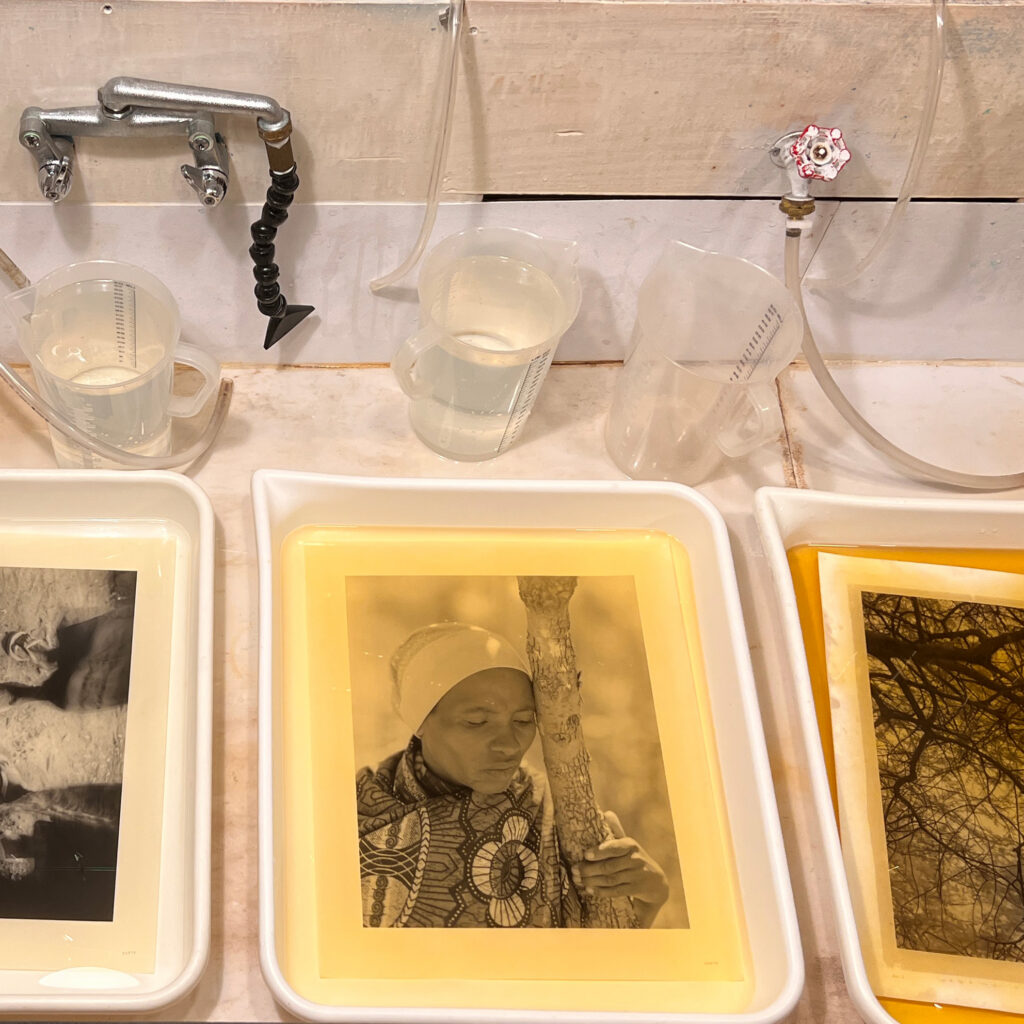
Unlike emulsion-based processes, platinum/palladium printing uses a liquid sensitizer that is absorbed into the paper, becoming part of the sheet itself. By the end of three days, you will have made finished platinum/palladium prints from your own digital negatives, and will understand the image, digital file, negative, and final print as an integrated system.
Topics: image preparation and tonal analysis for contact printing · digital negative output, film selection, calibration and density targets · linear inkjet negative output · the Malde-Ware system, sensitizer preparation and coating · UV exposure · processing and washing · evaluating and correcting prints · paper selection and image character.
You leave with: a complete workflow and a set of finished platinum/palladium prints; a grounding in the chemical logic of the process and the distinctive, material nature of sensitizer-based printing.
Workshop 2 — Wet-Lab Internegatives for Platinum/Palladium and Silver Gelatin Printing
3 days · Intermediate
Prerequisite: Workshop 1, or fundamental experience with analog film and silver gelatin processes and must have your own film negatives (in any format) to print from.
This workshop focuses on the craft of analoga negative-making in service of two distinct printing processes: platinum/palladium and silver gelatin. Working from in-camera negatives, you will develop a fine-tuned wet-lab workflow informed by the principles of digital negative-making—including scanning, and refine how tonal values translate from negative to print through film choice, development, and contrast control. You will work toward finished prints in both processes from negatives of your own making.
Topics: what each process demands of a negative · Zone System principles · in-camera negative evaluation · wet-lab internegative techniques, film types, enlargement and development · preparing and exposing platinum/palladium prints · silver gelatin paper, exposure and processing · comparative print evaluation.
You leave with: a refined analog negative-making workflow calibrated to two processes; finished prints in platinum/palladium and silver gelatin; and a transferable method for matching negatives to the demands of any process.
Workshop 3 — Advanced printing-out Platinum/Palladium
4 days · Advanced
Prerequisite: Workshops 1 and 2, or experience in platinum/palladium printing and digital negative-making.
For photographers who already print in printing-out platinum/palladium and want to push the process toward greater subtlety, control, and personal expression. You bring your own image project and work towards the full editorial and technical arc of realizing it as finished prints. Sessions address advanced sensitizer formulations, including the role of ammonium tetrachloroplatinate(II) and ammonium tetrachloropalladate(II) in controlling color, contrast, and tonal range, alongside refined negative-making for demanding subjects. Critique is substantive and integral, and the Malde-Ware system is treated in its full depth.
Topics: metal ratios, contrast control and color modulation · tonal mapping for complex subjects · paper conditioning, hydration and sensitizer dynamics in paper · rod and brush coating · exposure refinement · processing for permanence and archival standards · intensive critique, editing and sequencing · edition consistency and print records.
You leave with: finished prints of a portion of your own project at museum-quality standard; a deepened command of the Malde-Ware system; a personal print-record method.
Workshop 4 — Process and Expression
4 days · Advanced — open to anyone working with black and white inkjet, silver gelatin, or printing-out platinum/palladium.
Prerequisite: a thorough, working familiarity with a photographic workflow that includes making a fine print, digital or analog.
This workshop explores the profound relationship between materials and the “reading” of a printed image. Working hands-on from screen to the printing method you know best, you will test how specific material choices — paper, surface, tone, process — change the meaning and presence of your own images. Discussion and critique connect technical decisions to expressive intent.
Topics: how materials shape the reading of a print · advanced technical practice in your chosen process · carrying intent from screen to print · comparative work with the same image in different materials · paper and substrate as expressive decisions · critique of process and meaning.
You leave with: a set of comparative prints made in your own process; a more conscious command of how material choices carry expression; a framework for those choices in your ongoing practice.
Please note: this workshop does not teach a process. Applicants should already be fluent in the process they plan to use.
Is This For You?
These workshops welcome photographers at every stage, from first steps to advanced practice.
You are curious about hand-made prints. Workshop 1 assumes no darkroom experience — only basic digital imaging skills and a wish to make something lasting.
You work with film and want more from your negatives. Workshop 2 builds a deliberate, process-aware approach to analog negative craft.
You already print in platinum/palladium. Workshop 3 takes you from method to mastery, working on your own project.
You make fine prints in any process and want to go deeper. Workshop 4 explores how materials shape what a print expresses.
You want to keep working at home. Every workshop is designed to send you back to your own practice with the understanding to continue independently.
How Enrollment and Scheduling Work
There are no fixed dates. A workshop is scheduled once two applicants for the same topic share a date window that also fits our calendar.
- You apply. Choose the workshop(s) you want and every date window you can attend, through August 2028 (see calendar below). Applications are accepted on a rolling basis.
- We look for a match. A workshop goes ahead when three things line up: one topic, two participants, and dates that suit everyone.
- We keep you posted and confirm. We acknowledge every application within one week and stay in regular contact as possible dates take shape. We confirm or close each workshop date by email no later than six weeks beforehand.
Every workshop has two participants — no fewer, no more.
The more dates you offer, the sooner you are likely to be placed. A wide window gives the best chance of a match.
Apply with a friend. If you and a fellow photographer apply together for the same workshop and dates, the match is already made. Encourage your friends to think about this.
Calendar: Available Date Windows
Workshops are scheduled within these 10-day windows. Each window runs Friday to the second Sunday, so it includes two weekends.
| Window | Dates |
|---|---|
| August 2027 | Fri Aug 13 – Sun Aug 22, 2027 |
| Early November 2027 | Fri Nov 5 – Sun Nov 14, 2027 |
| Early February 2028 | Fri Feb 4 – Sun Feb 13, 2028 |
| Early May 2028 | Fri May 5 – Sun May 14, 2028 |
| August 2028 | Fri Aug 11 – Sun Aug 20, 2028 |
Practical Considerations
Tuition and Materials
There are no multi-workshop discounts; each workshop is priced on its own.
| Workshop | Teaching days | Tuition | Materials | Total per participant |
|---|---|---|---|---|
| 1 — Digital Internegatives & Foundations | 3 | $1,800 | $300 | $2,100 |
| 2 — Wet-Lab Internegatives | 3 | $1,800 | $300 | $2,100 |
| 3 — Advanced Platinum/Palladium | 4 | $2,400 | $400 | $2,800 |
| 4 — Process and Expression | 4 | $2,400 | $50–$400 | $2,450–$2,800 |
The Workshop 4 materials fee depends on the process you work in and is confirmed after enrollment. Travel, accommodation, and meals are not included. Sewanee is located in a rich ecosystem atop the Cumberland Plateau, about 90 minutes south of Nashville and 45 minutes northwest of Chattanooga; we are happy to recommend travel options and local accommodation.
One-to-One Concentrated Workshop
If you select two or more topics and no second participant can be matched, we may be able to offer a concentrated one-to-one workshop. It runs on consecutive days, 2 to 2.5 days per topic, at standard tuition and materials for each topic plus a one-to-one surcharge of $600 per day. Example: Workshops 1 and 2 taken one-to-one over 5 days = $3,600 tuition + $600 materials + $3,000 5 days tuition surcharge = $7,200.
Payment and Cancellation
- No deposit. No fees are due when you apply.
- Payment: the full fee (tuition and materials) is due within one week of our workshop and date confirmation email.
- If you cancel, for any reason, you may either transfer your seat to someone else (who is not already enrolled in that workshop), or receive a refund of 60% of the amount paid for the workshop.
- If one participant cancels, we will ask each of you, separately, to look for a replacement participant. A replacement must be found within one week of the cancellation, and no later than six weeks before the workshop begins. If no replacement is found, we will cancel the workshop.
- If we cancel a workshop, each participant still enrolled receives a full refund of workshop fees.
Ready to Apply?
The application takes a few minutes. It asks for:
- Your workshops — at least one, up to all four.
- Your available dates — every date window, through August 2028, that you could attend. More options mean a faster match.
- A little about your experience — and, for Workshop 4, the process you work in.
- A friend applying with you (optional), and whether you would consider a one-to-one workshop.
We will acknowledge your application within one week. Questions before you apply? Please write to us through our contact form.